

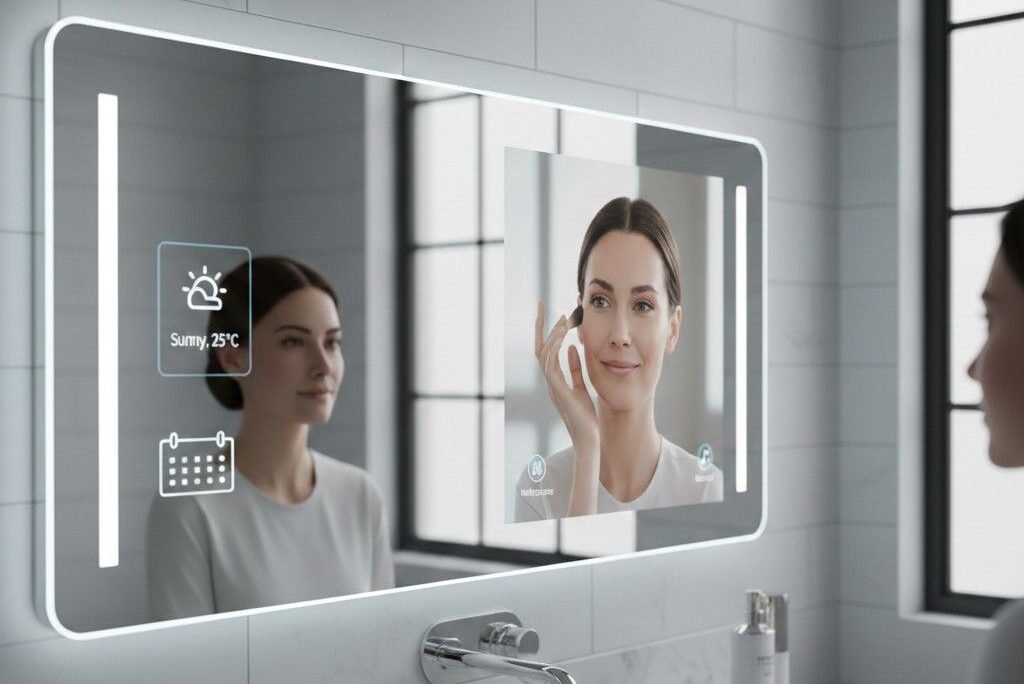
Smart mirrors are transforming homes, gyms, retail spaces and healthcare facilities by combining traditional reflection with interactive technology. Understanding their features, applications, and advantages is essential for buyers seeking the right product.
This guide explores smart mirror types, key brands, evaluation criteria, and practical buying guidance.
What Is a Smart Mirror?
A smart mirror is a reflective surface integrated with digital displays, sensors, and connectivity features. Unlike conventional mirrors, smart mirrors offer information such as time, weather, calendar notifications, health metrics, and personalized recommendations. Some advanced models support voice assistants, touch interaction, and even augmented reality applications.
Core Components of Smart Mirrors:
| Component | Function |
|---|---|
| Display Panel | Shows digital content, notifications, and interactive apps |
| Touch or Voice Control | Enables user interaction without physical buttons |
| Sensors | Detect presence, movement, or biometric data |
| Connectivity | Wi-Fi, Bluetooth, or smart home integration |
| Frame & Glass | Supports aesthetics, durability, and safety |
Key Features of Smart Mirrors
Smart mirrors vary widely by brand, model, and use. Here are the most sought-after features:
1. Interactive Touch and Voice Controls
Users can navigate apps, adjust settings, and control smart home devices using touch gestures or voice commands. Popular voice assistant integrations include Amazon Alexa, Google Assistant, and Apple Siri.
2. Health and Fitness Tracking
Smart mirrors equipped with AI cameras or sensors can track body metrics, posture, and workout progress. Fitness brands such as Mirror and Tonal specialize in interactive exercise programs.
3. Connectivity and Integration
Top smart mirrors integrate seamlessly with smart home ecosystems, calendars, streaming apps, and notifications. Wi-Fi and Bluetooth connectivity ensures synchronization across devices.
4. Customizable Display
Some models allow users to personalize the interface with widgets for weather, news, traffic, social media updates, or personalized reminders.
5. Lighting and Aesthetic Options
High-end mirrors offer adjustable LED lighting, anti-fog coatings, and sleek frames to blend with bathrooms, dressing rooms, or commercial spaces.
Types of Smart Mirrors
Fitness Smart Mirrors
Fitness smart mirrors are designed for home gyms and workout spaces. They offer interactive exercise programs, real-time posture correction, and AI-driven performance tracking. Popular brands like Mirror and Tonal provide guided workouts that adapt to user progress.
Bathroom Smart Mirrors
Bathroom smart mirrors enhance personal grooming routines. They include anti-fog coatings, adjustable LED lighting, and widgets for weather, news, or calendar updates. High-end options from Kohler and Simplehuman combine style with technology.
Retail Smart Mirrors
Retail smart mirrors improve the shopping experience by enabling augmented reality try-ons, virtual product previews, and inventory integration. Brands like MemoMi and Oak Labs specialize in mirrors that help customers visualize clothing, accessories, or cosmetics before purchase.
Hospitality Smart Mirrors
Hospitality mirrors are used in hotels and spas to provide personalized concierge messages, entertainment options, and room control features. Companies such as Samsung and LG offer solutions that blend luxury aesthetics with smart functionality.
Health Monitoring Smart Mirrors
Health monitoring mirrors are tailored for clinics, physiotherapy centers, and wellness-conscious homes. These mirrors track body metrics, vital signs, and posture, providing actionable insights to support fitness and medical routines.
However, choosing the right smart mirror is more than picking a sleek design. Display quality, connectivity, smart home integration, and long-term support affect performance and reliability.
Benefits of Smart Mirrors
Smart mirrors provide tangible advantages for both consumers and businesses.
1. Convenience and Efficiency
Users access information, control smart devices, and manage schedules directly from the mirror, reducing the need for multiple devices.
2. Enhanced Fitness and Wellness
Real-time feedback, virtual coaching, and health monitoring improve workout performance and posture correction.
3. Space Optimization
Smart mirrors combine reflection with digital display, saving wall or counter space in homes, gyms, and offices.
4. Commercial Value
Retail and hospitality installations enhance customer experience with interactive displays and personalized recommendations.
5. Energy Efficiency
LED lighting and low-power displays consume minimal electricity, making smart mirrors sustainable for long-term use.
Evaluation Criteria for Buyers
Before purchasing, consider these factors to ensure a smart mirror meets your needs:
- Display Quality: High-resolution screens offer clear visuals and better AR experiences.
- Interactivity: Evaluate whether touch, voice, or motion control is necessary.
- Integration: Check compatibility with smart home devices and fitness apps.
- Durability: Anti-fog, scratch-resistant coatings and robust frames extend lifespan.
- Warranty and Support: Top brands provide 1–3 year warranties and responsive customer service.
- Price vs Features: Compare features relative to cost; premium mirrors justify investment with advanced health tracking and AI features.
Buyer Guidance
- Installation Considerations: Ensure proper wall mounting, power outlet access, and network connectivity.
- Space Planning: Measure dimensions to fit the intended location.
- Feature Matching: Align mirror functions with lifestyle or business goals.
- Long-Term Support: Confirm warranty, software updates, and customer support availability.
For buyers ready to upgrade their space, you can buy smart mirrors from trusted premium mirror suppliers offering high-end designs, reliable installation, and warranty support. Smart mirror investments are long-term, so evaluating these factors prevents future complications.
FAQs
What is a smart mirror and how does it work?
A smart mirror is a reflective surface with digital displays and sensors. It shows notifications, fitness data, and integrates with smart home devices.
What are the main benefits of using a smart mirror?
Smart mirrors save time, track health metrics, and provide interactive apps. They combine reflection with convenience for home or business use.
Are smart mirrors compatible with all smart home devices?
Most smart mirrors support popular ecosystems like Alexa, Google Assistant, and Apple HomeKit. Checking device compatibility before purchase is recommended.
How long does a smart mirror typically last?
With proper use, a smart mirror lasts between five and ten years. Manufacturer warranties usually cover one to three years for added protection.
Conclusion
Smart mirrors are more than just reflective surfaces; they are interactive tools that enhance fitness, wellness, convenience, and commercial experiences. By understanding the types, features, benefits, and key buying considerations, users can select a mirror that perfectly fits their lifestyle or business needs. Evaluating factors like connectivity, display quality, integration, and warranty ensures a smart mirror delivers long-term value and reliability.
From home gyms and personal grooming spaces to retail and hospitality environments, expert guidance helps you choose the right smart mirror for your specific requirements. Sky Fancy Glass & Mirrors Trading is a trusted provider of smart mirror solutions across the UAE.
Contact our mirror specialists today to explore the perfect smart mirror setup for your home or commercial project.
Explore More Glass & Mirror Insights
Discover expert guides on mirrors, glass installation, and home décor trends to inspire your next design project.
- Top 10 considerations for using Antique Mirror Glass: Essential tips for selecting and installing antique mirror glass
- Frameless vs Semi-Frameless Glass Pool Fencing Compared: Choosing Between Frameless and Semi-Frameless Glass Fences
- LED Mirrors: Are They Worth It? The Ultimate Guide: Discover if LED mirrors are the perfect blend of style and functionality.
- Frontlit vs Backlit Bathroom Mirrors: Which Is Better?: Clear lighting or ambient glow? Choose the mirror that fits your bathroom needs.
- Choose the Best Makeup Mirror for Your Vanity: Find the ideal mirror that delivers clear lighting and effortless daily grooming.